|
Noticing Nature Welcome to my blog about nature in Southwest Florida designed to increase your enjoyment of the world around us. We are One: Polar Bears, Penguins and Plovers
Closeup male polar bear after eating seal Polar Bears on the Brink About 20,000 polar bears live in five countries in the Arctic circle: U.S. (Alaska), Canada, Norway, Russia, and Greenland. Bears travel great distances between their winter and summer habitats, crossing country borders. We share two polar bear populations: one with Russia, and one with Canada.
These huge carnivores (males can reach 1,500 pounds and measure eight to nine feet from nose to tail), are well adapted to a polar marine environment. White hair provides camouflage, while large paws enable careful treading on slippery ice, and fast swimming. Female paws carry scent on the ice so males can locate them during mating season. A polar bear’s acute sense of smell can track a scent twenty miles away.
Polar bears rely on sea ice for hunting, denning, and breeding. Due to climate change, their prime habitat is melting three weeks earlier and reforming three weeks later. Melting sea ice brings fewer ringed seals and less meat for bears. Thus, female bears are not eating as much and have fewer or no cubs. One-third to half of cubs die in their first year.
Female bear nursing 18 month old cubs. The female stays with her cubs for over 2 years.
Polar bears are threatened, yet harvested at an unsustainable rate: about 1,000 polar bears a year are killed. Although the Arctic glaciers are melting faster than any place on earth, excessive hunting of a declining population may push our white bear into extinction.
Polar bear climbing up on sea ice floe. Penguins in Antarctica
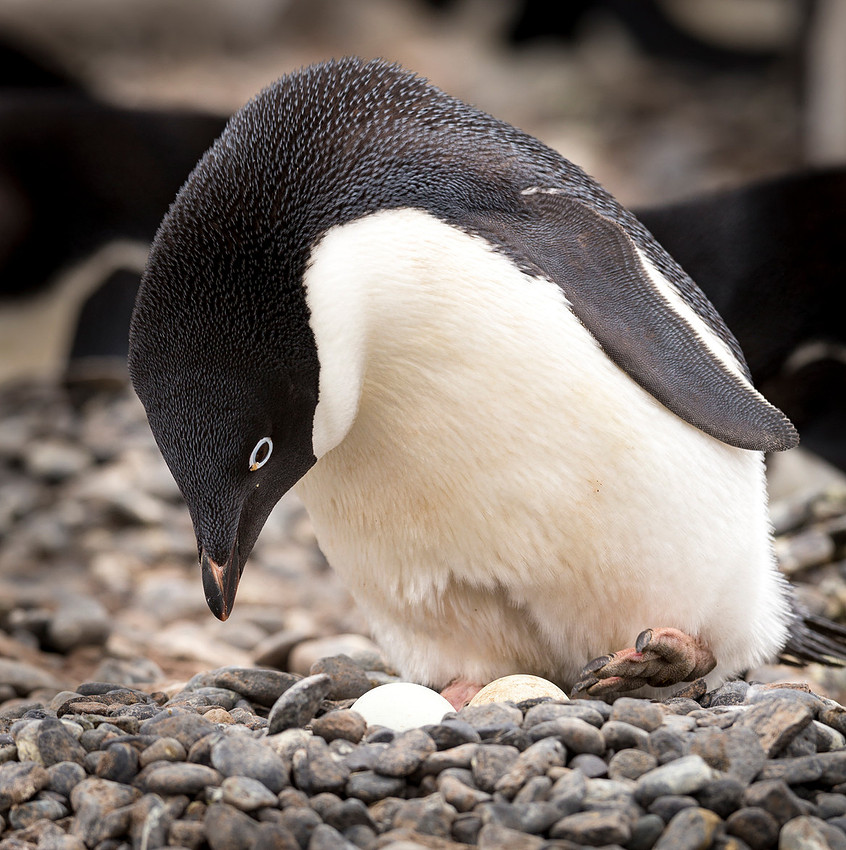
An Adelie Penguin checks her egg and re-positions them on her pebble nest. The Snowy Plover in Florida
This dainty waif of a shorebird (about six inches long) blends into the sand and disappears from sight as it dashes along the wrack line, eating tiny invertebrates. Like other state-threatened shorebirds, the snowy plover nests in small scrapes in the sand, usually on open beaches. Florida has about 200-250 breeding snowy plover breeding pairs.
This optimistic species regularly loses its eggs to predators, human disturbance and flooding, but most birds attempt to re-nest. Bird Stewards rope off areas and educate beach goers about these adorable creatures. Snowy plovers’ habitat is threatened due to sea-level rise, beach raking, and storms.
Climate change affects polar bears, penguins, plovers, and us. We are connected. As John Muir said, “When one tugs at a single thing in nature, he finds it attached to the rest of the world.”
|